


How much fabric is needed to reupholster a sofa
PellTex Practical Guide
How much fabric do you need to reupholster a sofa?
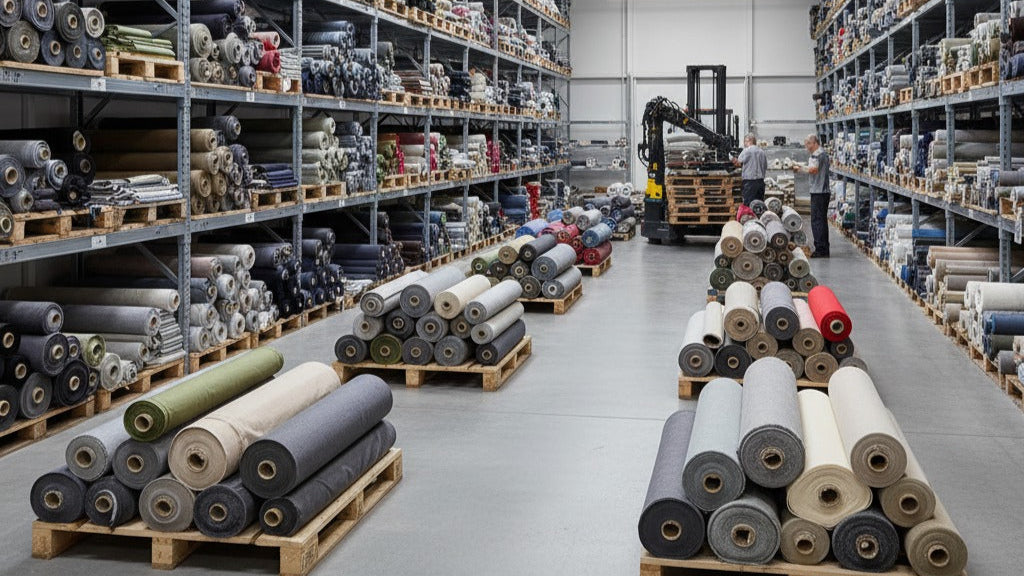
Fabric is sold by the linear meter on a roll of fixed width. This changes the entire calculation method.
Those accustomed to leather tend to think in square meters, which leads to incorrect calculations. With fabric, the right question is how many pieces fit within the width of the roll.
Here you will find a four-step method, a table by sofa type, and three situations that increase the fabric requirement.
Linear meters, not square meters

Fabric is unrolled: length matters, not surface area.
This is the first difference compared to leather, and it alone explains most purchasing errors. Upholstery fabric is sold by the linear meter on a roll of fixed width, usually 140 centimeters. When you order three meters, you receive a piece measuring 300 centimeters by the width of the roll.
This changes the way you calculate: you don't add up a surface area, but rather figure out how many pieces you can place side-by-side within the roll's width and how many meters you need to unroll to get them all.
The four-step method
Calculated linear meters × 1.15 = meters to order
Increase to 1.25 if the fabric has a directional pattern or design to be centered.
1. List the pieces
Disassemble the sofa and write down the measurements of each piece: backrest, armrests, front and back seat cushions, back cushions, front band, outer sides. For each, note the width by height in centimeters.
2. See how many fit in the roll's width
With a 140 cm roll, two 60 cm wide pieces will fit side-by-side; three will not. A 150 cm wide piece will not fit and must be rotated, which is only possible if the fabric has no directional pattern.
3. Sum the linear meters
For each row of pieces placed side-by-side, count the greater length, and sum all rows. The total represents the meters of fabric to be unrolled.
4. Add the margin
For fabric, the recommended safety margin is approximately 15%, significantly less than for leather because the roll has a regular shape and there are no areas to discard.
Practical table by type

Indicative values for a 140 cm roll, already including the margin. They serve as a guide before measurement, not to replace it.
| Type | Linear meters |
|---|---|
| Single armchair | 3 - 4 m |
| 2-seater sofa | 7 - 9 m |
| 3-seater sofa | 10 - 13 m |
| Corner sofa | 16 - 21 m |
| Set of 6 chairs | 3 - 4 m |
When the requirement increases
Good to know
The standard width of an upholstery roll is typically 140 cm. This is the first piece of information to ask for: the same project can require very different meterage depending on the available width.
Three situations increase the amount needed, and should be recognized before ordering.
- Fabric with a directional pattern. Velvets have a pile direction: all pieces must be cut in the same direction, otherwise the color will appear different from piece to piece. This prevents rotating pieces for optimization and adds, on average, 10% to the requirement.
- Fabric with a design to be centered. If there is a repeating pattern, the pieces must be aligned with each other. The requirement increases in proportion to the pattern repeat.
- Tufting and capitonné. These absorb much more material than a smooth surface because the fabric must follow the contours. For a capitonné headboard, consumption can double.
How to read a technical data sheet

Before ordering, it's worth looking at three pieces of information, which tell more than any description.
Roll width
Determines how many pieces you can place side-by-side. A wider roll can significantly reduce the meters needed for wide pieces.
Abrasion resistance
Expressed in Martindale cycles, this is the most reliable indicator of how long it will last. It is used for selection based on use, not for comparing aesthetics.
Composition and treatments
These indicate how it will behave with liquids and how it should be cleaned. A surface water-repellent treatment, for example, radically changes daily maintenance.
Common mistakes to avoid
- Ordering without knowing the roll width. The same project can require very different meterage depending on the available width.
- Ignoring the pile direction on velvet. This is the most visible and least fixable mistake: it becomes noticeable after the work is finished, when there's no going back.
- Ordering in two separate batches. Rolls from different dye lots may have slightly different color rendering. It's better to get an extra meter all at once.
- Forgetting the tucks. Each flap that goes under the structure adds several centimeters per side.
- Calculating on a worn sofa. If you re-stuff the padding, the volume returns to factory specifications and the surface area increases.
In summary
List the pieces, check how many fit within the roll's width, sum the rows, and add 15%. If the fabric has a directional pattern or design, increase to 25%.
It's a simple method, but in the workshop practice, it's the one that prevents almost all purchasing errors.
Are you choosing fabric for your project?
Browse the available collections and request a sample before ordering.
Discover PellTex fabrics
Leave a comment
This site is protected by hCaptcha and the hCaptcha Privacy Policy and Terms of Service apply.